Monument to the Uprising of the People of Kordun and Banija
Monument to the Uprising of the People of Kordun and Banija
There is much that can be written about the Monument to the Uprising of the People of Kordun and Banija. There is also much that has already been written about the Monument of… oh, I’m just going to call it the Monument - saves me a good amount of typing.
Because so much has already been written about it, I will not repeat the purpose of the Monument, its construction dates, and so on – you can find that all on Wikipedia.
I arrived at the Monument early in the morning and was the only person there. Approaching it from the car park, I immediately understood the effect Vojin Bakić had envisaged when he planned it. From the visitor centre, long since stripped of most useful material, I started climbing the stairs towards the Monument. Although it is already visible from the car park, it disappears from view as you climb, only to reappear in a great reveal, with the circular granite symbolic tomb in front of it.
Sources call this the Grobnica — literally, “tomb” — although none I have found say whose remains, if any, it contains. On the day of my visit it had been decorated with fresh flowers, suggesting that there are still people who use the Monument as it was intended: as a place to remember the fallen.
The rest of what I noticed during my visit is in the descriptions accompanying the photos — click them to open a full-screen view, and select “read more” where provided.
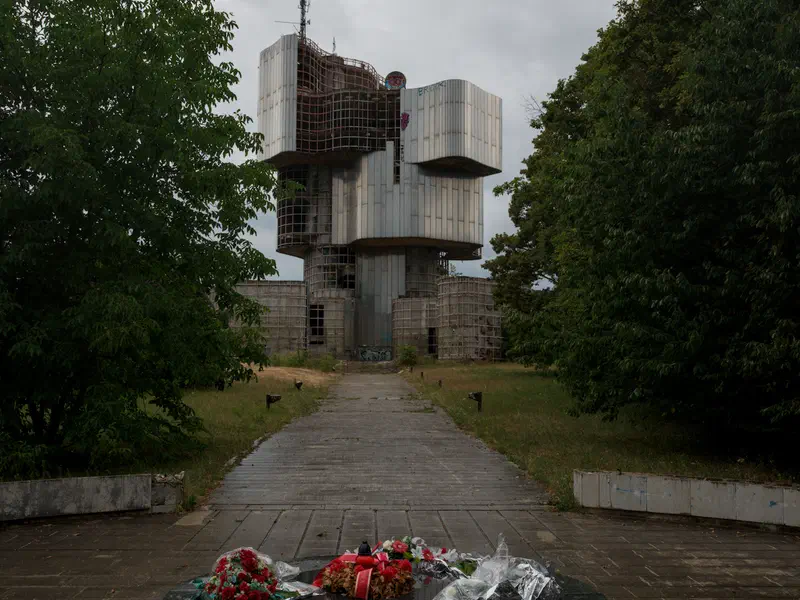
The reveal you get coming up the steps to the Monument
I can only imagine what this must have felt like when all the steel panels were still in place, with the landscape reflecting in the walls of the Monument.
Even with around half the steel plates gone, the effect is breathtaking.
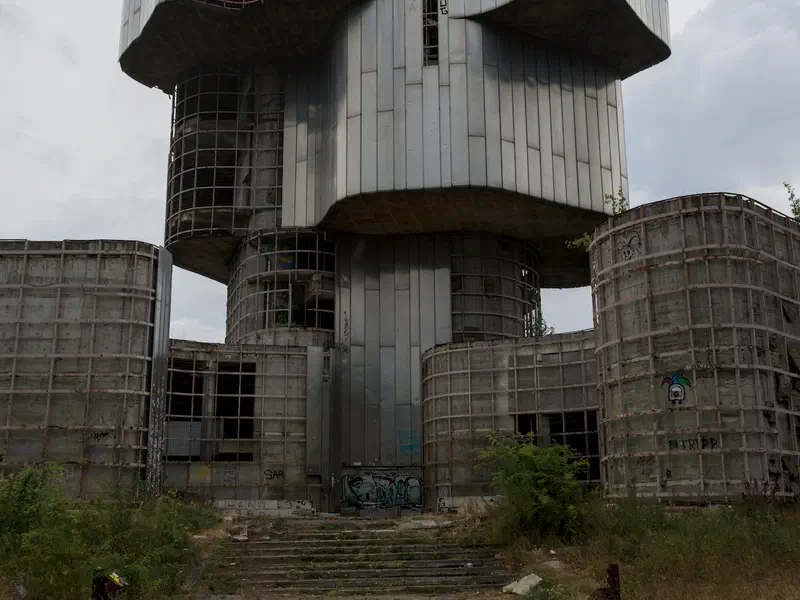
One challenge…
…that I encountered more in this place than I usually do is this: How do you convey scale in photographs. Yes, the Monument looks big. What you don’t get from this picture is the massive “Wow”-moment you get when you step through the outer wings.
For a small bit of context, check the next picture.
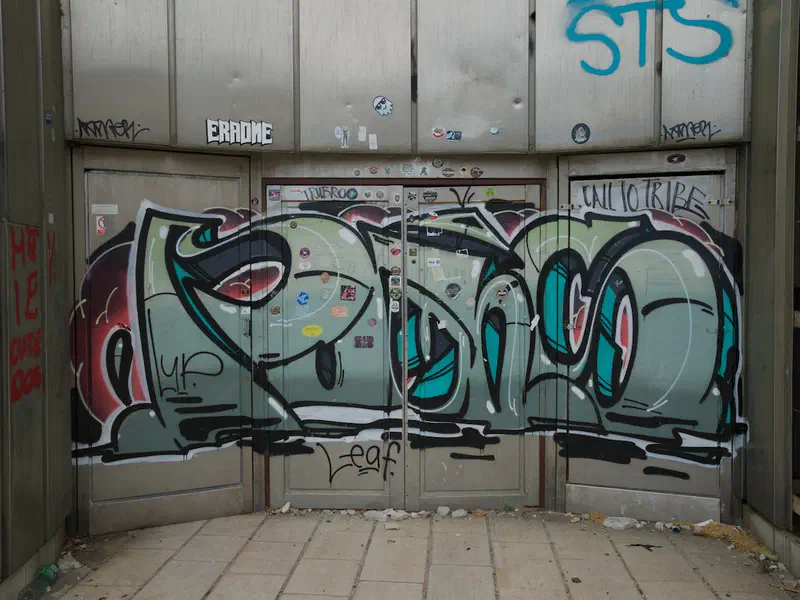
Main entrance
You’ve already seen this part in the previous photo. This is the main entrance. We all know what size a door usually is, so that gives you the context I promised.
Check the previous picture again to see how big the door is in relation to the whole structure.
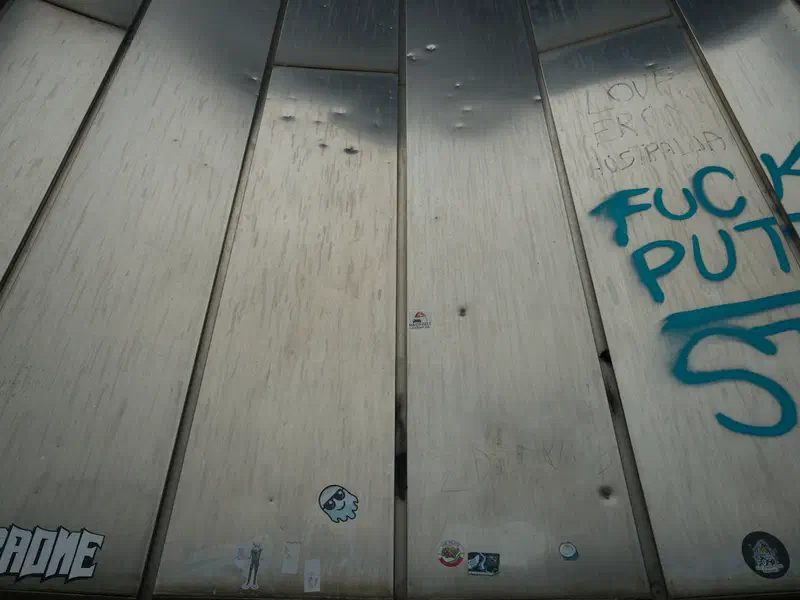
Vandalism
The Monument did see military use during the Croatian War of Independence. After 1991, while the area was under Serb control, the Yugoslav People’s Army repurposed the Monument and the surrounding memorial park as a military installation.
This is no longer legible in the building today; the interior has been stripped so thoroughly that I found no obvious trace of its wartime functions.
The bullet marks visible on the exterior do not look much like relics of that fighting either. The ones I saw are small, shallow dents rather than penetrations; from my own experience, they are not what I would expect from rifle fire.
They therefore appear to belong to the Monument’s rather longer post-war history of people shooting at things because they can.
In other words: more idiots.
Inside
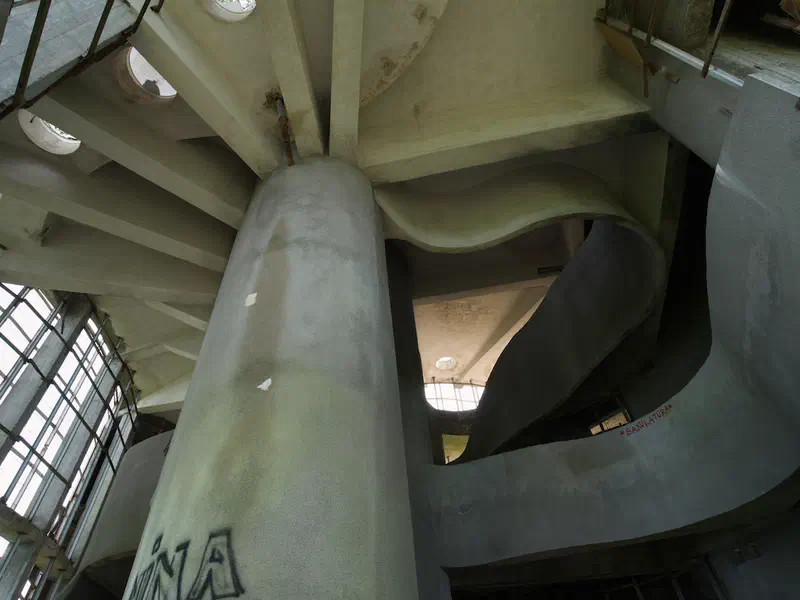
The front door is locked. But with so many panels removed, it is easy enough to get inside the structure. What struck me is how organic some of it feels. Some of the internal structures seem to have grown rather than been built.
The inside is almost totally empty apart from some rubble and twisted metal left over from the scavengers who removed the steel panels. There is no evidence left of any of the exhibits or infrastructure the building originally housed.
Windows? Not originally…
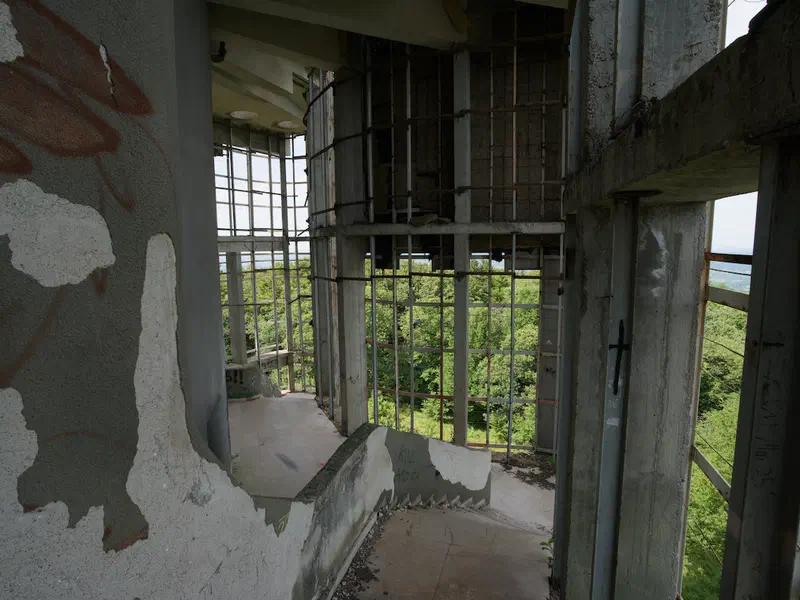
What visitors to the Monument often forget: If the steel panels hadn’t been removed, there would be very little daylight inside. The whole building had no windows in any of the walls, the only natural light coming in through circular skylights in the ceilings.
The nice views through the walls are entirely a product of the Monument’s current stripped state.
A tale of two Petrovacs
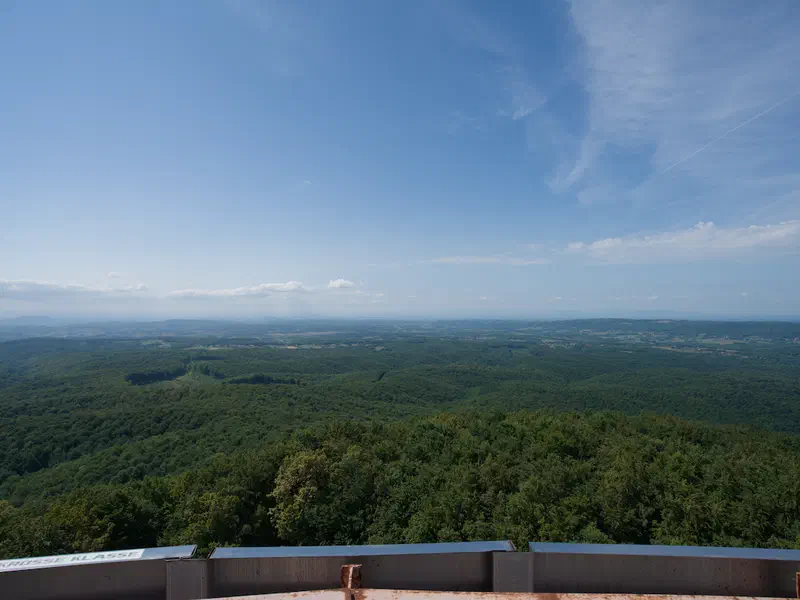
From the former observation deck, around 540 metres above sea level, the view extends across much of central Croatia and, in clear weather, towards Zagreb, Slovenia and Bosnia and Herzegovina. The geometric horizon is roughly 80–90 kilometres away, while distant mountains can be visible considerably farther.
One slightly odd detail: the Monument does not actually stand on the highest point of Petrova Gora. It sits on Mali Petrovac, at about 507 metres above sea level, while nearby Veliki Petrovac wins by a thoroughly unimpressive five metres. Quite a few publications get this wrong and place the Monument on Veliki Petrovac instead – including Wikipedia, which even contradicts itself. The page on the Monument puts it on Veliki Petrovac, while the page on Petrova Gora correctly states Mali Petrovac.
I met two Czech forestry researchers at the top. They were initially quite puzzled by my incredulity – “Strange place to be. Hardly any forests around here.”
I know…
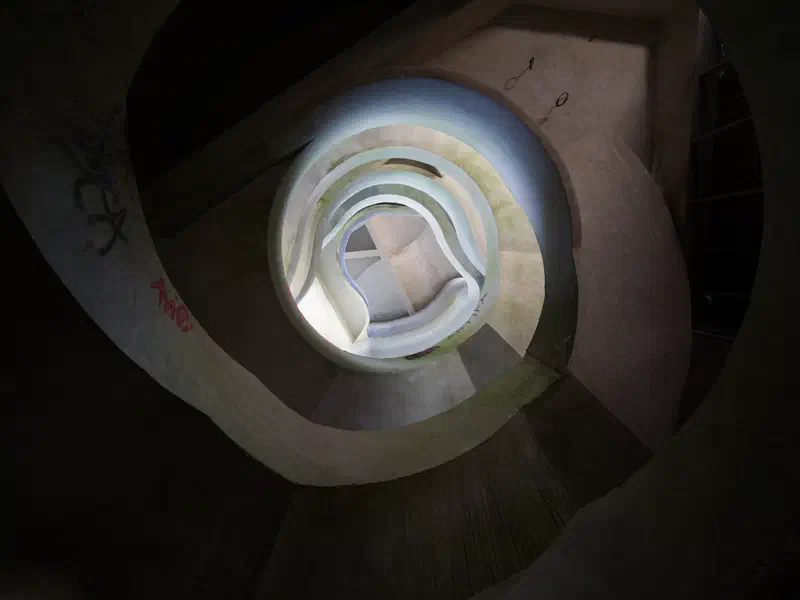
Everybody takes that photo. So I had to as well.
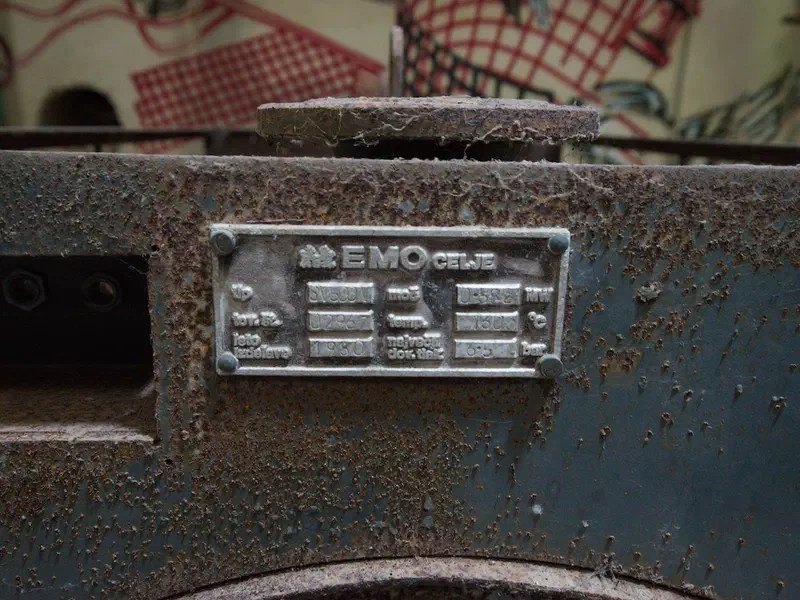
The heating system
One thing I’ve noticed in several abandoned places I’ve visited: One of the last things to go – if it ever does – is the heating system. The Monument is no exception. Two large oil-fired boilers and a tangle of piping still skulk around in the basement: rusty, stripped of most of their parts, but still labelled and dated.
At 582 kW each, these were decidedly industrial rather than domestic heating units. Between them, they could put out well over a megawatt of heat – a rather substantial amount of machinery lurking underneath what most visitors probably think of purely as a monument.
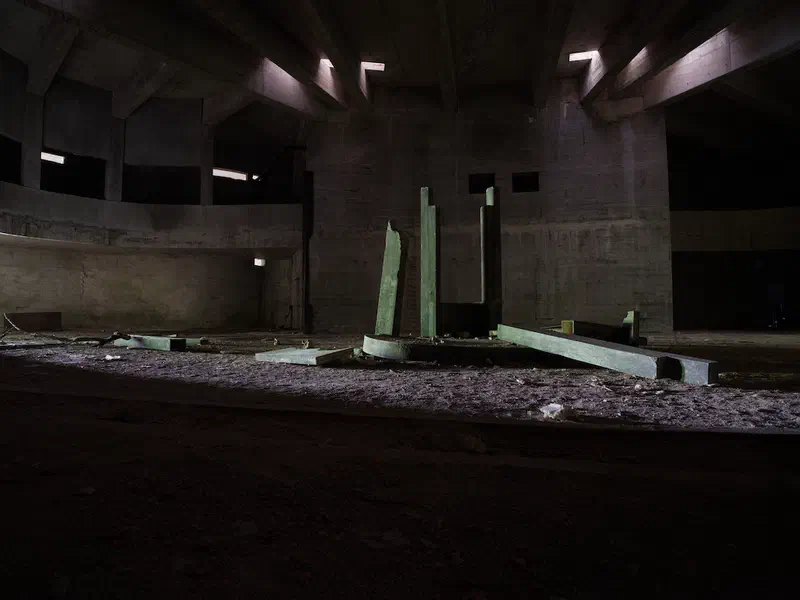
Relics in the Basement
This is one of my favourite shots I took in the Monument. I don’t know exactly what it shows, apart from that it must be what remains of some installation in the centre of the basement.
The basement. Neither the word nor, again, the photo can really convey what I found when I came down the steps. The Monument itself is big. The basement is bigger. Suddenly, the Monument feels like a relatively small structure sitting on top of a cavernous, multi-storey empty space.
This photo was taken using only the tiny amount of daylight that found its way down there — the exposure time was half a minute. The light from the left comes from the basement exit, which emerges from the side of the hill beneath the Monument.
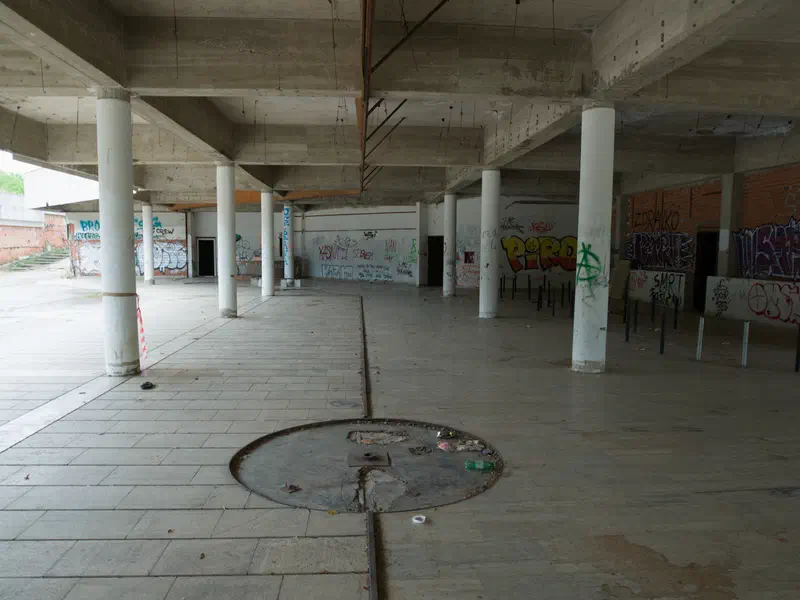
Revolving Doors
Back outside, and down into the former visitors’ centre. As I mentioned, there is not much left in the way of infrastructure apart from a big central bar and some benches around it.
What remains very legible is that the visitors’ centre once had glass walls and revolving doors. The metal framing is still there, as are the lower parts of the door mechanisms. The glass, however, is completely gone — not even shards remain.
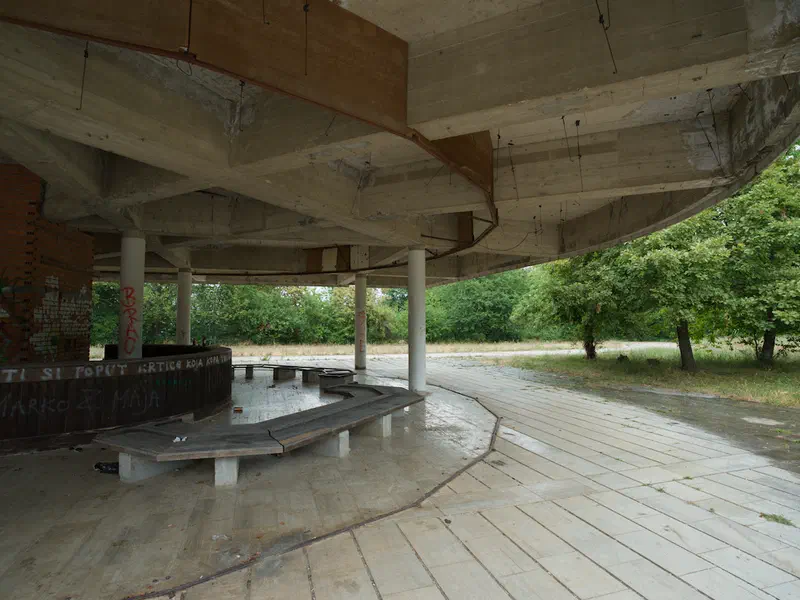
The bar
With the onset of rain, at least the roof turned out to be still waterproof. The remaining benches were an inviting place to break out the gas cooker and make lunch. Unfortunately, the gas cartridge I brought had other ideas and refused to fit the cooker. As I found out over the next few days, central Croatia seems to only know one kind of gas cartridge: the wrong one.
Still, a cold lunch was just as welcome.